Our Mission
At CaneAssist, our mission is to make everyday mobility simpler and more enjoyable by creating clever, easy-to-use accessories that take the frustration out of using a walking cane or hiking staff. We focus especially on solving the common annoyance of parking or resting your cane—eliminating those precarious leans against walls and tables that never quite stay put.
Guided by our philosophy of adapting smart off-the-shelf products to address real everyday issues, we keep costs low so we can offer CaneAssist as a free community service. Whether received at no charge or ordered online for just shipping and handling, our goal is to deliver greater accessibility and value—so you can focus on staying active, independent, and confident on all your daily adventures.
Sticks for All Walks Of Life
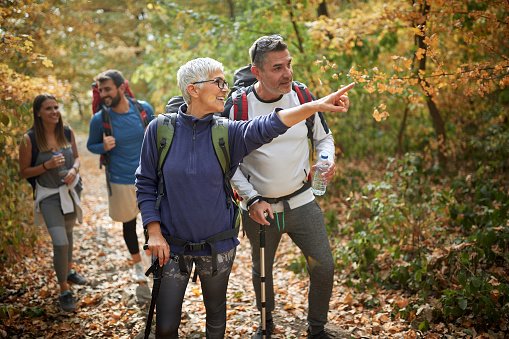
Hiking with a stick or staff
Hiking with a stick (or trekking poles) is a simple way to boost safety, comfort, and performance on the trail.
Key benefits:
- Protects your joints: Reduces impact on knees, ankles, and hips—especially on descents (studies show up to 25% less knee stress).
- Improves balance & stability: Adds an extra point of contact on uneven, slippery, or rocky terrain.
- Enhances uphill efficiency: Uses your arms for propulsion, making climbs easier and less tiring.
- Builds endurance: Turns hiking into a full-body workout, reducing leg fatigue and increasing calorie burn.
- Versatile tool: Probes the trail, pushes brush aside, and can serve as emergency support.
A single stick offers simplicity and leaves one hand free, while two poles provide more balanced support. Either way, it's low-cost, lightweight, and makes hiking safer and more enjoyable—especially if you have joint concerns or face steep/long trails.
Your knees (and the miles ahead) will thank you
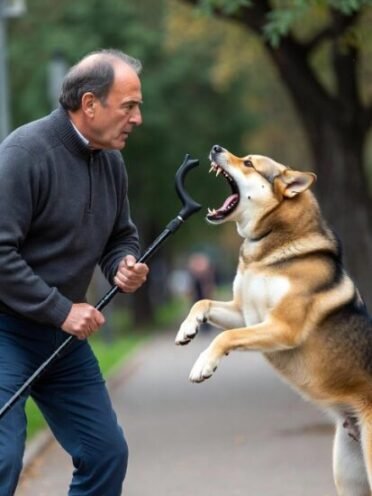
More than a walking stick
Using a walking stick or cane for personal defense is a practical option, especially for everyday carry.
It serves as a mobility aid while always at the ready as an self-defense tool that's generally legal and non-threatening in appearance.
This approach draws from systems like Cane Masters training, Bartitsu (Victorian-era gentleman’s self-defense with a hooked cane), and modern adaptations from Filipino martial arts (FMA) or basic stick fighting.
Choosing the Right Cane or Walking Stick
- Straight walking stick/staff: Often 36–50+ inches long (roughly to your sternum or armpit when held vertically). Hickory, ash, or similar hardwoods provide good durability and weight. A simple hiking staff or jo staff works well for leverage and reach.Youtube
- Hooked cane: The crook/hook adds versatility for trapping limbs, hooking ankles, pulling, or targeting sensitive areas like the groin or neck. Many prefer this for defensive "quick draw" from a natural walking grip.
- Material and features: Look for sturdy, weather-resistant wood or composite that won't splinter easily. Avoid overly decorative or "tactical" designs that might draw attention. Brands like Cane Masters specialize in self-defense-oriented canes that are strong yet look ordinary.Canemasters
- Fit: It should support your weight comfortably for daily use while allowing a firm grip. Test balance and length—too short limits reach; too long feels awkward.
Tip: Practice carrying and transitioning from "walking mode" (relaxed grip, crook facing back or forward depending on style) to "defense mode" quickly.

Top Ten Reasons to Carry a Cane/Staff
In a world full of complex self-defense tools, the humble walking cane (or its versatile cousin, the umbrella cane) stands out as one of the most practical, discreet, and effective options for everyday carry.
Whether you're in rainy Jacksonville, Florida, or anywhere else, a sturdy cane blends seamlessly into daily life while providing real protection. Here are the top ten reasons why more people—from seniors to able-bodied walkers—are choosing to carry one.
- It's Always in Your Hand and Ready to Go
Unlike a firearm, knife, or pepper spray that requires drawing from a pocket or holster, a cane is already deployed as you walk. No fumbling under stress—just transition from a relaxed walking grip to a ready defensive position in a split second. This "always ready" advantage is repeatedly highlighted in cane self-defense training.
- Legal to Carry Almost Everywhere
A plain walking cane or umbrella cane is viewed as a mobility aid or weather accessory, not a weapon. In Florida and across the US, you can carry it legally in airports, courthouses, schools, and public buildings without issue. No permits needed, and it avoids the restrictions that apply to blades, stun guns, or concealed firearms. Sword canes have limitations, but a standard sturdy cane does not.
- Exceptional Reach and Distance Control
A good cane (36–40 inches) keeps attackers at bay, allowing you to thrust or strike before they close the distance for punches or grabs. This reach advantage works especially well against dogs, multiple threats, or edged weapons—extend the tip like a bayonet to target the face, throat, or limbs while maintaining space.
- Versatile Striking and Control Options
With simple training, a cane delivers powerful thrusts, swings, blocks, and hooks (especially with a crook handle). Use two-handed jabs for maximum force, downward strikes to the head or collarbone, or the crook to trap limbs and pull an attacker off balance. It excels at both long-range and close-quarters work.
- Plausible Deniability and Low Profile
Most people see a cane and assume it's for support or rain protection—not a self-defense tool. This psychological edge means attackers may underestimate you, while security or bystanders view it as completely innocent. An umbrella cane adds even more utility in Florida's frequent downpours without raising eyebrows.
- Dual-Purpose Functionality
A quality cane supports mobility on uneven terrain, helps with balance, or serves as a walking aid if needed. Reinforced models (like the Unbreakable® Walking-Stick Umbrella) double as sturdy umbrellas that withstand heavy impacts yet remain lightweight for daily carry. It’s one tool that truly pulls double (or triple) duty.
- Non-Lethal (But Highly Effective) Stopping Power
Cane strikes can stun, disable, or create compliance without necessarily escalating to lethal force. Target high-percentage areas like the snout (against dogs), arms, legs, or solar plexus. Training emphasizes "stupid simple" techniques that work under adrenaline, making it suitable when deadly force isn't justified.
- Builds Real Skills and Confidence
Consistent practice improves grip strength, coordination, footwork, and situational awareness. Systems like American Cane Self Defense, Ray Floro’s umbrella cane methods, or Bartitsu turn the cane into an extension of your body. Many practitioners report feeling more empowered and less like an easy target.
- Effective Against a Wide Range of Threats
From aggressive dogs (thrust to the snout or use as a barrier) to human assailants, a cane handles grabs, punches, and charges effectively. It pairs well with awareness and de-escalation, and reinforced versions can even break a car window in an emergency while still functioning normally.
- Affordable, Durable, and Accessible for All Ages
Unlike expensive tactical gear, a solid cane or umbrella cane is relatively inexpensive yet built to last (some models carry multi-year warranties). It requires minimal maintenance and works regardless of your age or fitness level—proper technique leverages body mechanics more than brute strength. Training resources are widely available online or through local classes.
Carrying a cane isn't about looking for trouble—it's about being quietly prepared for whatever life (or the weather) throws at you. Pair it with basic training in thrusts, blocks, and transitions, and you gain a reliable companion that supports your daily routine while offering genuine peace of mind.
Whether you choose a classic hooked cane or a reinforced umbrella cane for Jacksonville’s unpredictable rains, this simple tool delivers outsized value. Stay aware, train consistently, and walk with confidence.