
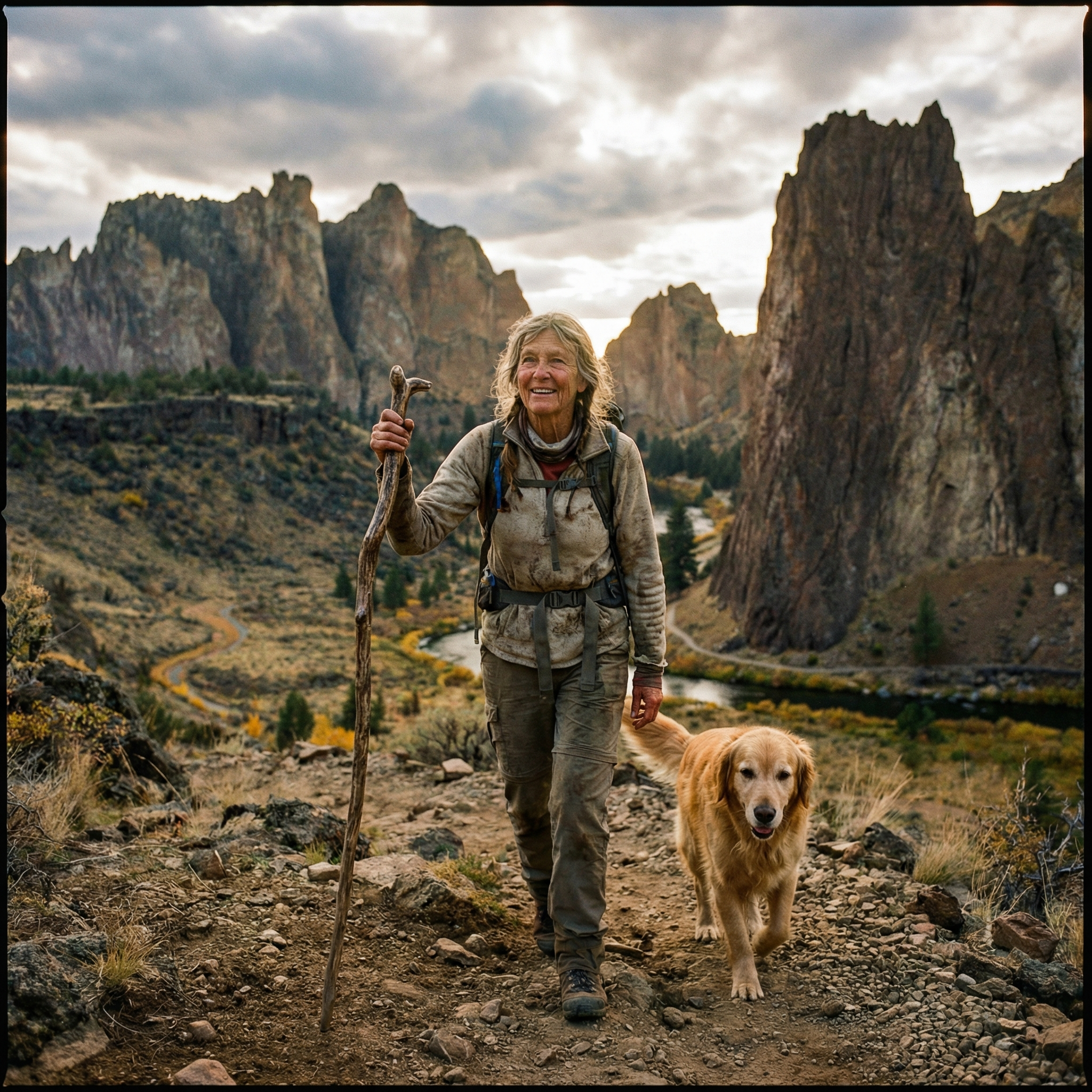
Man's Very Best Friend When Out and About
(OK...And Maybe A Dog Too)
Hiking with a stick, whether a traditional wooden walking staff or a modern adjustable trekking pole, offers hikers a simple yet effective way to enhance safety, comfort, and performance on the trail.
While many people picture a classic single stick (often called a hiking staff), the advantages largely overlap with those of trekking poles, though a pair typically provides more symmetrical support.
Here's why incorporating one (or better yet, two) can transform your hiking experience.
Joint protection and reduced impact. One of the most significant benefits is offloading stress from your lower body, especially the knees, ankles, and hips. On descents, a stick absorbs shock that would otherwise jar your joints. Studies show trekking poles can reduce knee compressive forces by up to 25% during downhill sections.
This is particularly valuable on steep or rocky trails, helping prevent pain, fatigue, and long-term wear and tear. Even a single sturdy stick provides meaningful relief when planted firmly during steps.
Improved balance and stability
A stick adds an extra point of contact with the ground, turning your two-legged stride into a more tripod-like base. This boosts stability on uneven, slippery, or loose terrain, reducing the risk of slips, trips, or ankle twists.
It's especially helpful for stream crossings, muddy sections, or when carrying a heavy pack; the added leverage helps you brace against unexpected shifts in weight.
Enhanced propulsion and efficiency on ascents. Uphill, a stick lets you push off with your arms, recruiting upper-body muscles to assist your legs. This makes climbs feel easier, helps maintain momentum, and can lead to a steadier pace.
Many hiker report covering more ground with less perceived effort, and research indicates poles enable longer, quicker strides while preserving a natural gait.
Better overall endurance and a full-body workout. By engaging your arms and shoulders, a stick turns hiking into a more complete exercise. This distributes effort across more muscle groups, often resulting in less leg fatigue over long distances.
Some studies report increased calorie burn (about 20% higher in certain conditions) and cardiovascular benefits, along with reduced hand swelling from improved circulation during ascents.123
Versatile, practical uses
Beyond movement, a stick serves as a probe to test trail depth, push aside brush, or even provide emergency support (like splinting or warding off wildlife in rare cases). A single stick leaves one hand free for photos, maps, or snacks, ideal if you prefer minimal gear.
While a single stick excels in simplicity and tradition, many experts recommend two poles for balanced, symmetrical aid that maximizes these benefits across varied terrain. Either way, proper technique, plant the stick opposite your forward foot and adjust the length so your elbow bends about 90 degrees, unlocking the full advantages.
Whether you're tackling a gentle day hike or a multi-day backpacking trip, adding a stick:
- is low cost
- a lightweight upgrade
- promotes safer steps
- reduces wear, tear, and soreness
- enables greater enjoyment on the trail
- provides improved personal safety (think dealing with critters in the environment)
If joint issues, steep paths, or longer outings are in your plans, it's worth giving a walking staff or cane a try; your knees (and the miles ahead) will thank you.